🍂 霜降 Shuāngjiàng – When Frost Appears and Autumn Fades
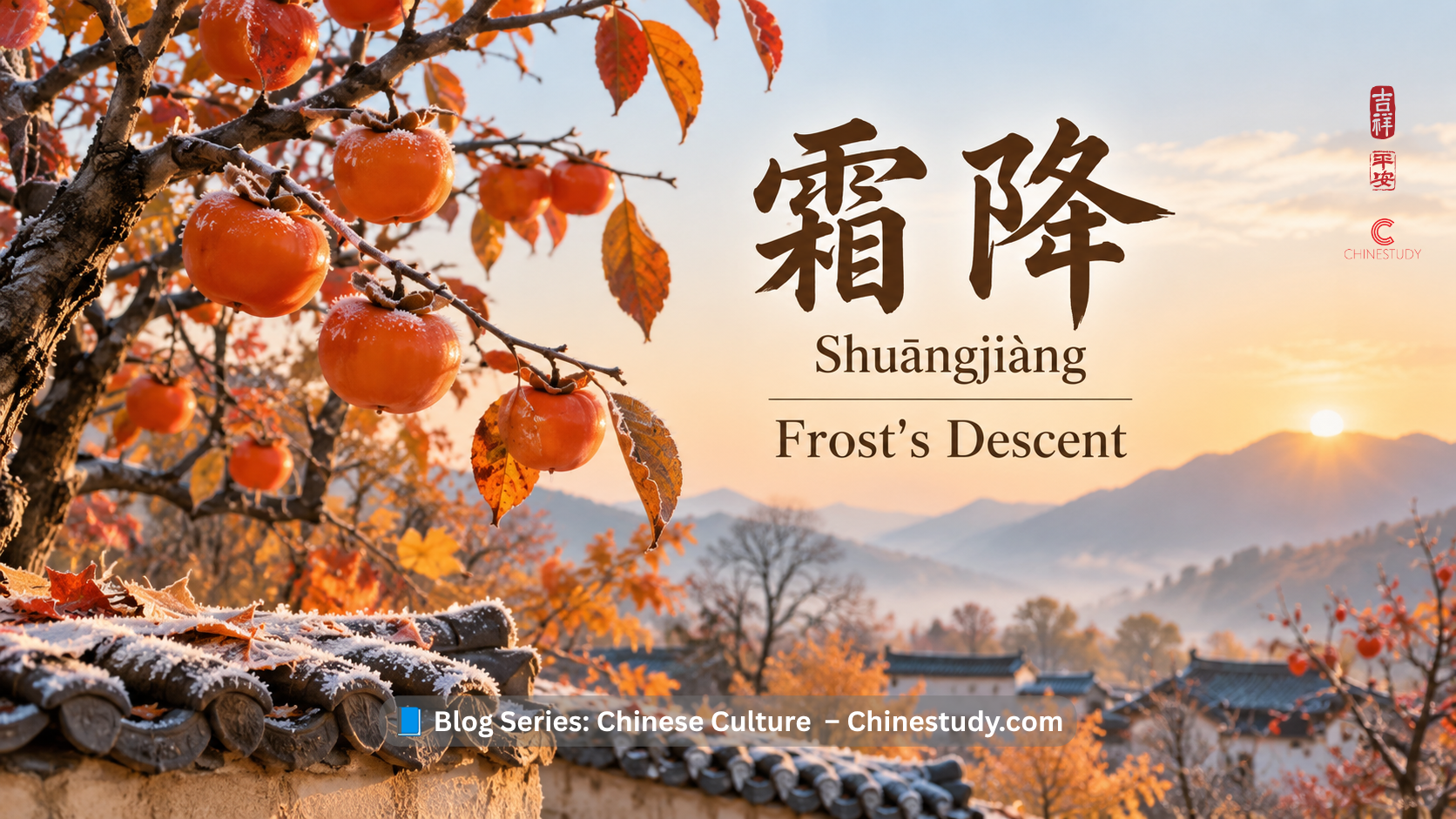
🍁 What Is 霜降 (Shuāngjiàng)?
霜降 (Shuāngjiàng), or Frost’s Descent, is the 18th of China’s 24 solar terms (二十四节气, èrshísì jiéqì).
It usually falls around October 23 or 24 and is the last solar term of autumn, marking the transition toward colder weather and the approach of winter.
🧐 What Does the Name Mean?
The name 霜降 (Shuāngjiàng) describes an important change in late autumn:
- 霜 (shuāng): frost
- 降 (jiàng): descend / fall
Literally, 霜降 can be understood as “Frost’s Descent.” It reflects the colder days of late autumn, when frost becomes more common and winter is approaching.
🥢 What Do People Eat During 霜降?
Food traditions during 霜降 (Shuāngjiàng) vary across China, but they often reflect the foods available at the end of autumn and the traditional idea of preparing the body for colder weather.
One of the best-known foods is 柿子 (shìzi), persimmons. Persimmons ripen in autumn and are especially sweet around this time. Traditionally, eating persimmons during Shuāngjiàng was also associated with staying healthy as colder weather approached.
萝卜 (luóbo), radishes, are another seasonal food. They can be eaten fresh or cooked in warming dishes such as soups and stews.
In some places, people eat 鸭子 (yāzi), duck, during Shuāngjiàng. In traditional Chinese food culture, late autumn is a time to 补 (bǔ), to nourish the body in preparation for winter. Duck is one of the foods traditionally eaten for this purpose.
Together, these foods show how 霜降 connects seasonal eating with the transition from autumn to winter.
🗣 Key Vocabulary & Expressions
Here are some useful Chinese words connected with 霜降 (Shuāngjiàng) and late autumn:
- 霜降 (shuāngjiàng) – Frost’s Descent
- 霜 (shuāng) – frost
- 冷 (lěng) – cold
- 秋天 (qiūtiān) – autumn
- 冬天 (dōngtiān) – winter
- 落叶 (luòyè) – falling leaves
- 柿子 (shìzi) – persimmon
- 萝卜 (luóbo) – radish
- 鸭子 (yāzi) – duck
- 变冷 (biàn lěng) – become colder
🧩 Interactive Practice
Translate this sentence into English:
- 霜降以后,天气越来越冷了。
- Shuāngjiàng yǐhòu, tiānqì yuèláiyuè lěng le.
Answer:
After Shuāngjiàng, the weather gets colder and colder.
🇨🇳 Cultural Insight: From Autumn to Winter
霜降 (Shuāngjiàng) is the last solar term of autumn. The next solar term is 立冬 (Lìdōng), or Beginning of Winter.
But the change from autumn to winter does not happen overnight. Temperatures fall, leaves change color and drop, frost becomes more common, and the natural world slowly prepares for winter.
This gradual transition reflects an idea at the heart of the 24 solar terms (二十四节气, èrshísì jiéqì): observing small changes in nature to understand the changing seasons.
🌟 Final Thoughts
霜降 (Shuāngjiàng) marks the final days of autumn and the approach of winter. From colder mornings to ripe persimmons and falling leaves, it reflects a season of quiet change.
After Shuāngjiàng comes 立冬 (Lìdōng), or Beginning of Winter, the first solar term of winter.
🇨🇳 Curious about more Chinese traditions?
📚 Step into the blog series: Chinese Culture!
Thank you for subscribing!
Have a great day!