❄️ 立冬 Lìdōng: When Winter Begins
❄️ What Is 立冬 (Lìdōng)?
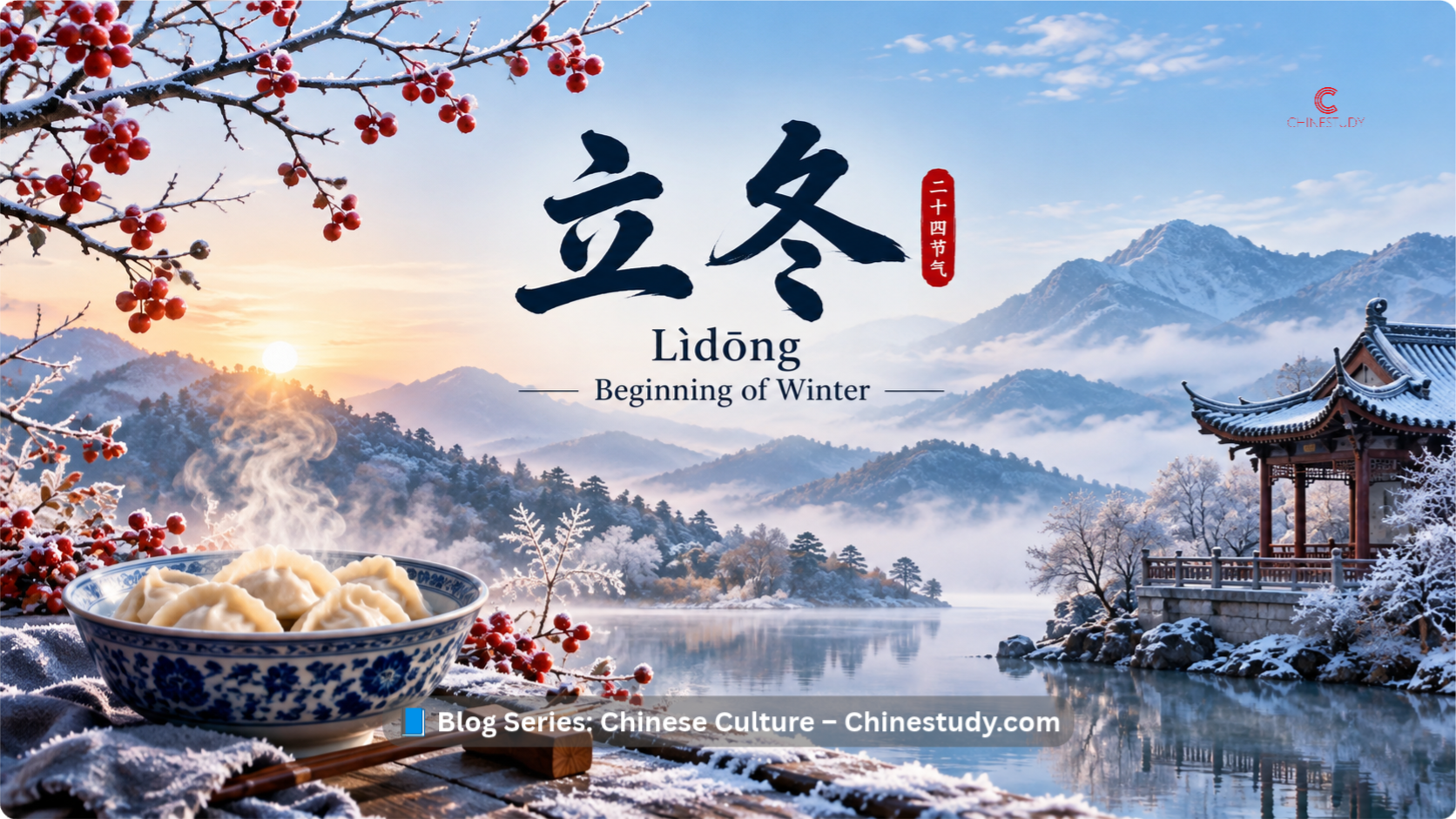
立冬 (Lìdōng), or Beginning of Winter, is the 19th of China’s 24 solar terms (二十四节气, èrshísì jiéqì).
It usually falls around November 7 or 8 and marks the traditional beginning of winter in the Chinese calendar.
🧐 What Does the Name Mean?
The name 立冬 (Lìdōng) can be understood by looking at its two characters:
- 立 (lì) – begin / start
- 冬 (dōng) – winter
Together, 立冬 means “Beginning of Winter.”
🧣 What Do People Do During 立冬?
Traditionally, 立冬 (Lìdōng) is a time to prepare for the colder months ahead.
In Chinese culture, the changing seasons are closely connected with 养生 (yǎngshēng), the practice of caring for one’s health and well-being.
As winter approaches, people traditionally emphasize keeping warm, getting enough rest, and eating nourishing foods. These habits reflect the idea of adjusting daily life to the changing seasons.
🥟 What Do People Eat During 立冬?
Food traditions during 立冬 (Lìdōng) vary across China, but many are connected with preparing for colder weather.
In northern China, 饺子 (jiǎozi), dumplings, are a popular choice. People also enjoy warming dishes such as 羊肉汤 (yángròu tāng), lamb soup.
In southern China, some families prepare dishes with 鸡 (jī), chicken, or 鸭 (yā), duck, as part of a tradition called 补冬 (bǔ dōng), which means nourishing the body in preparation for winter.
These traditions show how seasonal foods play a role in welcoming winter in Chinese culture.
🗣 Key Vocabulary & Expressions
Here are some useful Chinese words connected with 立冬 (Lìdōng) and the beginning of winter:
- 立冬 (lìdōng) – Beginning of Winter
- 冬天 (dōngtiān) – winter
- 天气 (tiānqì) – weather
- 变冷 (biàn lěng) – become colder
- 保暖 (bǎonuǎn) – keep warm
- 养生 (yǎngshēng) – take care of one’s health
- 补冬 (bǔ dōng) – nourish the body in preparation for winter
- 饺子 (jiǎozi) – dumplings
- 羊肉 (yángròu) – lamb / mutton
🧩 Interactive Practice
Translate this sentence into English:
- 立冬以后,天气越来越冷了。
- Lìdōng yǐhòu, tiānqì yuèláiyuè lěng le.
Answer:
After Lìdōng, the weather gets colder and colder.
🌟 Final Thoughts
立冬 (Lìdōng) marks the traditional beginning of winter in China.
From wearing warmer clothes to enjoying seasonal foods, it reflects how people adapt their daily lives to the changing seasons.
After 立冬 comes 小雪 (Xiǎoxuě), or Minor Snow, the next solar term, as winter gradually deepens.
🇨🇳 Curious about more Chinese traditions?
📚 Step into the blog series: Chinese Culture!
Thank you for subscribing!
Have a great day!