💧 寒露 Hánlù – When Dew Turns Cold and Autumn Deepens
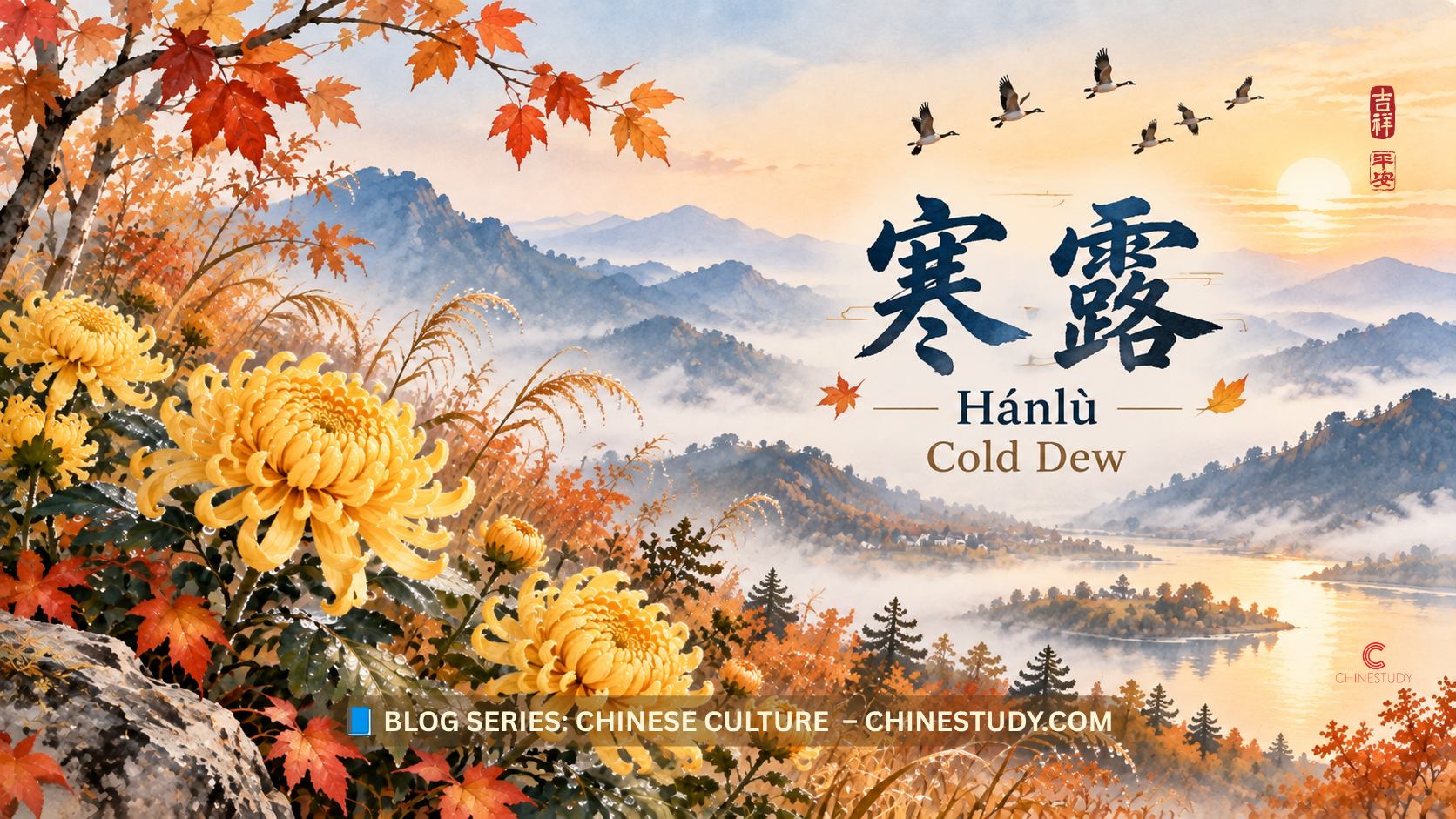
💧 What Is 寒露 (Hánlù)?
寒露 (Hánlù), or Cold Dew, is the 17th of China’s 24 solar terms (二十四节气, èrshísì jiéqì).
It usually begins around October 8-9 and marks a time when autumn is deepening and temperatures are noticeably cooler.
🧐 What Does the Name Mean?
The name describes the season itself:
- 寒 (hán): cold
露 (lù): dew
During this period, the morning dew becomes colder as the weather moves toward late autumn.
🍂 What Happens in Nature During Hánlù?
In traditional Chinese culture, each solar term is divided into three shorter periods called 候 (hòu), each lasting about five days. Together, they are known as the 三候 (sān hòu), or “three pentads.”
For 寒露 (Hánlù), the three traditional signs of season are:
- 鸿雁来宾 (hóngyàn lái bīn) — Wild geese arrive as "guests."
Migrating geese had already begun flying south during Báilù. By Hánlù, the later groups are arriving, which ancient people described as “guests.”
- 雀入大水为蛤 (què rù dàshuǐ wéi gé) — Sparrows enter the water and become clams.
This does not describe a real transformation. In ancient China, sparrows seemed to disappear as the weather grew colder, while clams with markings resembling birds were found near the water. People imagined that the sparrows had transformed into clams.
- 菊有黄华 (jú yǒu huáng huá) — Yellow chrysanthemums begin to bloom.
Chrysanthemums are strongly associated with autumn in Chinese culture, and their flowering is one of the traditional signs of this season.
These observations show how closely people in ancient China watched changes in animals, plants, and weather to understand the passing of the seasons.
🌼 What Do People Do During Hánlù?
Unlike a traditional festival, 寒露 (Hánlù) does not have one set of customs followed throughout China. Many activities associated with Hánlù simply reflect the beauty of late autumn.
One traditional activity is 登高 (dēnggāo), or climbing to a high place. With cooler weather and clear autumn skies, people traditionally enjoyed going outdoors, climbing hills or mountains, and taking in the autumn scenery.
Another is 赏菊 (shǎng jú), or admiring chrysanthemums. Chrysanthemums bloom around this time and have long been an important symbol of autumn in Chinese culture.
These late-autumn traditions are also closely associated with 重阳节 (Chóngyáng Jié), the Double Ninth Festival, which falls around the same season. Both climbing to high places and admiring chrysanthemums have important cultural connections with this traditional Chinese festival.
🥢 What Do People Eat During Hánlù?
Food traditions during 寒露 (Hánlù) vary across China, often reflecting what is in season locally.
In northern China, especially around Beijing, there is a tradition of 吃芝麻 (chī zhīma), or “eat sesame,” during Hánlù. Popular sesame foods include 芝麻酥 (zhīma sū, sesame crisps) and 芝麻烧饼 (zhīma shāobing, sesame flatbread).
In the 江南 (Jiāngnán) region, Hánlù arrives during crab season. As chrysanthemums bloom in autumn, crabs are also becoming plump, making 吃螃蟹 (chī pángxiè), or eating crab, a popular seasonal pleasure.
These foods show an important idea behind the Chinese solar terms: eating with the seasons and enjoying foods when they are naturally at their best.
🗣 Key Vocabulary & Expressions
Here are some useful Chinese words for talking about Hánlù and autumn:
- 寒露 (hánlù) – Cold Dew
- 露水 (lùshuǐ) – dew
- 秋天 (qiūtiān) – autumn
- 凉 (liáng) – cool
- 菊花 (júhuā) – chrysanthemum
- 大雁 (dàyàn) – wild goose
- 登高 (dēnggāo) – climb to a high place
- 赏菊 (shǎng jú) – admire chrysanthemums
🧩 Interactive Practice
Translate this sentence into English:
- 寒露以后,天气越来越凉了。
- Hánlù yǐhòu, tiānqì yuèláiyuè liáng le.
Answer:
After Hánlù, the weather gets cooler and cooler.
🇨🇳 Cultural Insight: Watching the Seasons Change
One interesting thing about the 24 solar terms (二十四节气, èrshísì jiéqì) is how closely their names follow small changes in nature.
Look at these three autumn solar terms:
白露 (Báilù) – White Dew
寒露 (Hánlù) – Cold Dew
霜降 (Shuāngjiàng) – Frost’s Descent
From White Dew to Cold Dew, the air grows cooler and the dew becomes colder. By Frost’s Descent, frost begins to appear.
This gradual progression shows how people in ancient China observed the natural world carefully and used those changes to mark the passing of time.
寒露 (Hánlù) is more than a date on the traditional calendar. It is one step in nature’s quiet transition from autumn toward winter.
🌟 Final Thoughts
寒露 (Hánlù) may not be a festival, but it offers a beautiful glimpse into the traditional Chinese way of observing the seasons. From colder morning dew and migrating geese to blooming chrysanthemums and seasonal foods, each change tells us that autumn is moving quietly forward.
After Hánlù comes 霜降 (Shuāngjiàng), or Frost’s Descent, the last solar term of autumn. As its name suggests, colder days are just around the corner.
🇨🇳 Curious about more Chinese traditions?
📚 Step into the blog series: Chinese Culture!
Thank you for subscribing!
Have a great day!