☀️ 冬至 Dōngzhì – When the Light Begins to Return
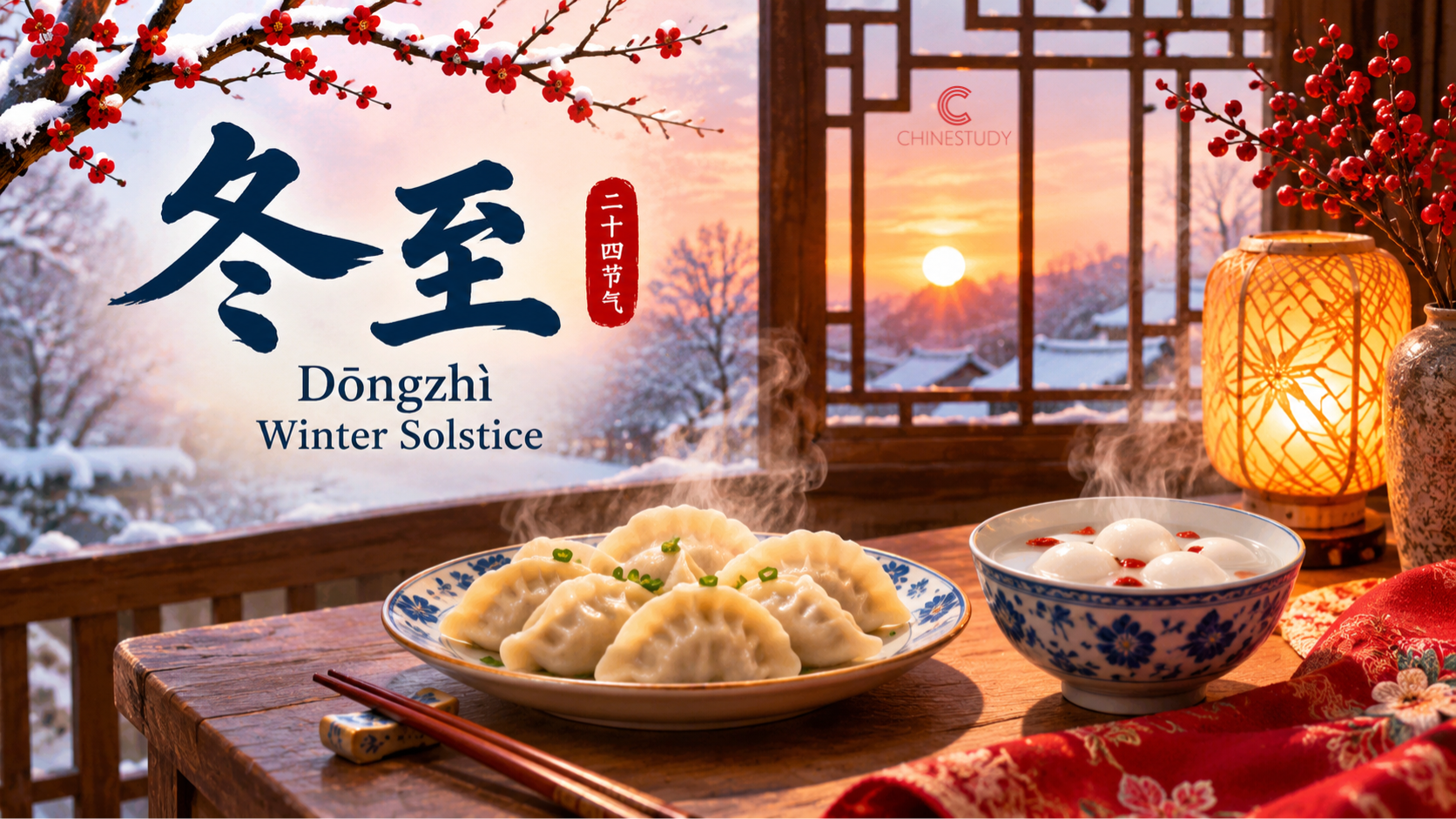
❄️ What Is 冬至 (Dōngzhì)?
冬至 (Dōngzhì), or Winter Solstice, is the 22nd of China’s 24 solar terms (二十四节气, èrshísì jiéqì) and the fourth solar term of winter.
It usually falls around December 21 or 22 and marks the shortest day and longest night of the year in the Northern Hemisphere.
After 冬至, the days gradually become longer again.
🧐 What Does the Name Mean?
The name 冬至 (Dōngzhì) can be understood by looking at its two characters:
- 冬 (dōng) – winter
- 至 (zhì) – to arrive / extreme point
Together, 冬至 refers to the point in winter when daylight is at its shortest and the night is at its longest.
In traditional Chinese culture, 冬至 is also seen as a turning point, marking the gradual return of longer days.
☀️ Why Is 冬至 Important in Chinese Culture?
There is a traditional Chinese saying:
冬至大如年 (dōngzhì dà rú nián)
The Winter Solstice is as important as the New Year.
In ancient China, 冬至 was an important occasion for celebration, family gatherings, and honoring ancestors.
According to the traditional Chinese concept of 阴阳 (yīnyáng), yin and yang, 冬至 marks the point when yin reaches its peak and yang begins to grow again.
Although the coldest days of winter are still ahead, 冬至 symbolizes the return of light and the beginning of a new cycle.
🥢 What Do People Eat During 冬至?
Food is an important part of 冬至 celebrations, and traditions vary across China.
In northern China, people traditionally eat 饺子 (jiǎozi), dumplings. According to a popular folk belief, eating dumplings during 冬至 helps protect people’s ears from the winter cold. This belief is associated with the shape of 饺子, which resembles human ears.
In many parts of southern China, people eat 汤圆 (tāngyuán), glutinous rice balls. Their round shape symbolizes 团圆 (tuányuán), family reunion, and togetherness.
For many families, 冬至 is still an occasion to gather and enjoy a meal together.
9️⃣ What Is 数九 (Shǔjiǔ)?
Starting from 冬至, Chinese people traditionally count the days of winter through a custom called 数九 (shǔjiǔ), counting the nines.
The 81 days, starting with 冬至 itself, are divided into nine periods of nine days each. The third and fourth periods, known as 三九 (sānjiǔ) and 四九 (sìjiǔ), are traditionally considered the coldest time of winter.
There is also a well-known folk song called 九九歌 (jiǔjiǔgē), the Nine-Nine Song, which describes how the weather and nature change during these nine periods.
Here are its opening lines from a popular version:
一九二九不出手,三九四九冰上走。
Yī jiǔ èr jiǔ bù chū shǒu, sān jiǔ sì jiǔ bīng shàng zǒu.
During the first two nines, people keep their hands tucked away. During the third and fourth nines, people walk on ice.
By the end of the ninth period, the weather is becoming warmer and signs of spring are appearing.
🗣 Key Vocabulary & Expressions
Here are some useful Chinese words and expressions connected with 冬至 (Dōngzhì) and its traditions:
- 冬至 (dōngzhì) – Winter Solstice
- 白天 (báitiān) – daytime
- 黑夜 (hēiyè) – night / nighttime
- 阴阳 (yīnyáng) – yin and yang
- 饺子 (jiǎozi) – dumplings
- 汤圆 (tāngyuán) – glutinous rice balls
- 团圆 (tuányuán) – family reunion / to reunite
- 数九 (shǔjiǔ) – counting the nines
- 九九歌 (jiǔjiǔgē) – the Nine-Nine Song
- 冬至大如年 (dōngzhì dà rú nián) – The Winter Solstice is as important as the Chinese New Year.
🧩 Interactive Practice
Translate this sentence into English:
- 冬至以后,白天会越来越长。
- Dōngzhì yǐhòu, báitiān huì yuèláiyuè cháng.
Answer:
- After the Winter Solstice, the days will get longer and longer.
🌟 Final Thoughts
冬至 (Dōngzhì) is more than just a solar term. It is a time for family reunions, traditional celebrations, and welcoming the gradual return of longer days.
From eating 饺子 and 汤圆 to counting the nines, these traditions reflect the close connection between nature and everyday life in Chinese culture.
The next solar term is 小寒 (Xiǎohán), Minor Cold, when winter enters one of its coldest periods.
🇨🇳 Curious about more Chinese traditions?
📚 Step into the blog series: Chinese Culture!
Thank you for subscribing!
Have a great day!