❄️ 大雪 Dàxuě – When Snow Brings Hope
❄️ What Is 大雪 (Dàxuě)?
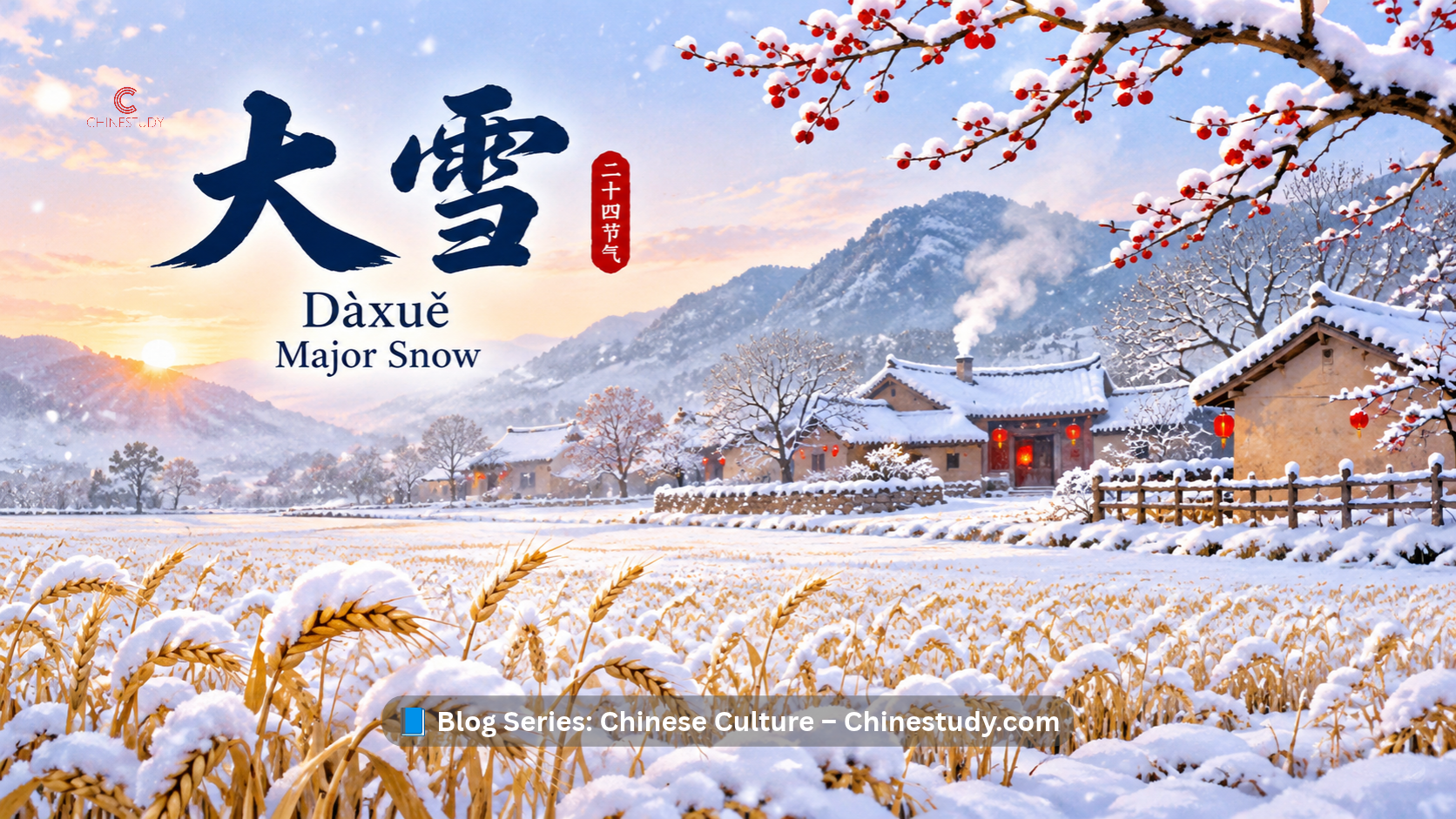
大雪 (Dàxuě), or Major Snow, is the 21st of China’s 24 solar terms (二十四节气, èrshísì jiéqì) and the third solar term of winter.
It usually falls around December 6 or 7 and marks a period when temperatures drop further and snowfall becomes more frequent in many parts of northern China.
🧐 What Does the Name Mean?
The name 大雪 (Dàxuě) can be understood by looking at its two characters:
- 大 (dà) – big / large
- 雪 (xuě) – snow
Together, 大雪 means “Major Snow.”
Compared with 小雪 (Xiǎoxuě), Minor Snow, 大雪 indicates a greater likelihood of snowfall and heavier snow.
🌾 Why Is Snow Important in Chinese Culture?
There is a well-known Chinese saying:
瑞雪兆丰年 (ruìxuě zhào fēngnián)
A timely snowfall promises a good harvest.
In traditional Chinese farming, winter snow is often seen as a good sign. A layer of snow helps protect crops from extreme cold, and when the snow melts, it provides water for the soil.
For this reason, snow is not just a sign of cold weather. In Chinese culture, it is also a symbol of good fortune and hope for a fruitful year ahead.
🥢 What Do People Eat During 大雪?
As winter deepens, warm and nourishing foods become especially popular.
In some parts of China, people traditionally eat 羊肉 (yángròu), lamb or mutton, during 大雪. Hot lamb soup is a popular winter dish.
In parts of northern China, there is also a tradition of eating 红薯 (hóngshǔ), sweet potatoes. Roasted sweet potatoes, 烤红薯 (kǎo hóngshǔ), are a popular winter street food, enjoyed for their warmth and natural sweetness.
🗣 Key Vocabulary & Expressions
Here are some useful Chinese words and expressions connected with 大雪 (Dàxuě) and winter traditions:
- 大雪 (dàxuě) – Major Snow / heavy snow
- 下雪 (xià xuě) – to snow
- 积雪 (jīxuě) – accumulated snow on the ground
- 融化 (rónghuà) – to melt
- 寒冷 (hánlěng) – cold
- 丰收 (fēngshōu) – a good harvest
- 羊肉 (yángròu) – lamb / mutton
- 红薯 (hóngshǔ) – sweet potato
- 烤红薯 (kǎo hóngshǔ) – roasted sweet potato
- 瑞雪兆丰年 (ruìxuě zhào fēngnián) – A timely snowfall promises a good harvest.
🧩 Interactive Practice
Translate this sentence into English:
- 雪还没有融化。
- Xuě hái méiyǒu rónghuà.
Answer:
- The snow hasn’t melted yet.
🌟 Final Thoughts
大雪 (Dàxuě) marks a time when winter deepens and snow becomes more common in northern China.
As the traditional saying 瑞雪兆丰年 reminds us, winter snow brings hope for a good harvest in the coming year.
The next solar term is 冬至 (Dōngzhì), Winter Solstice, the shortest day and longest night of the year in the Northern Hemisphere.
🇨🇳 Curious about more Chinese traditions?
📚 Step into the blog series: Chinese Culture!
Thank you for subscribing!
Have a great day!