🌼 重阳节 Chóngyáng Jié: China’s Double Ninth Festival
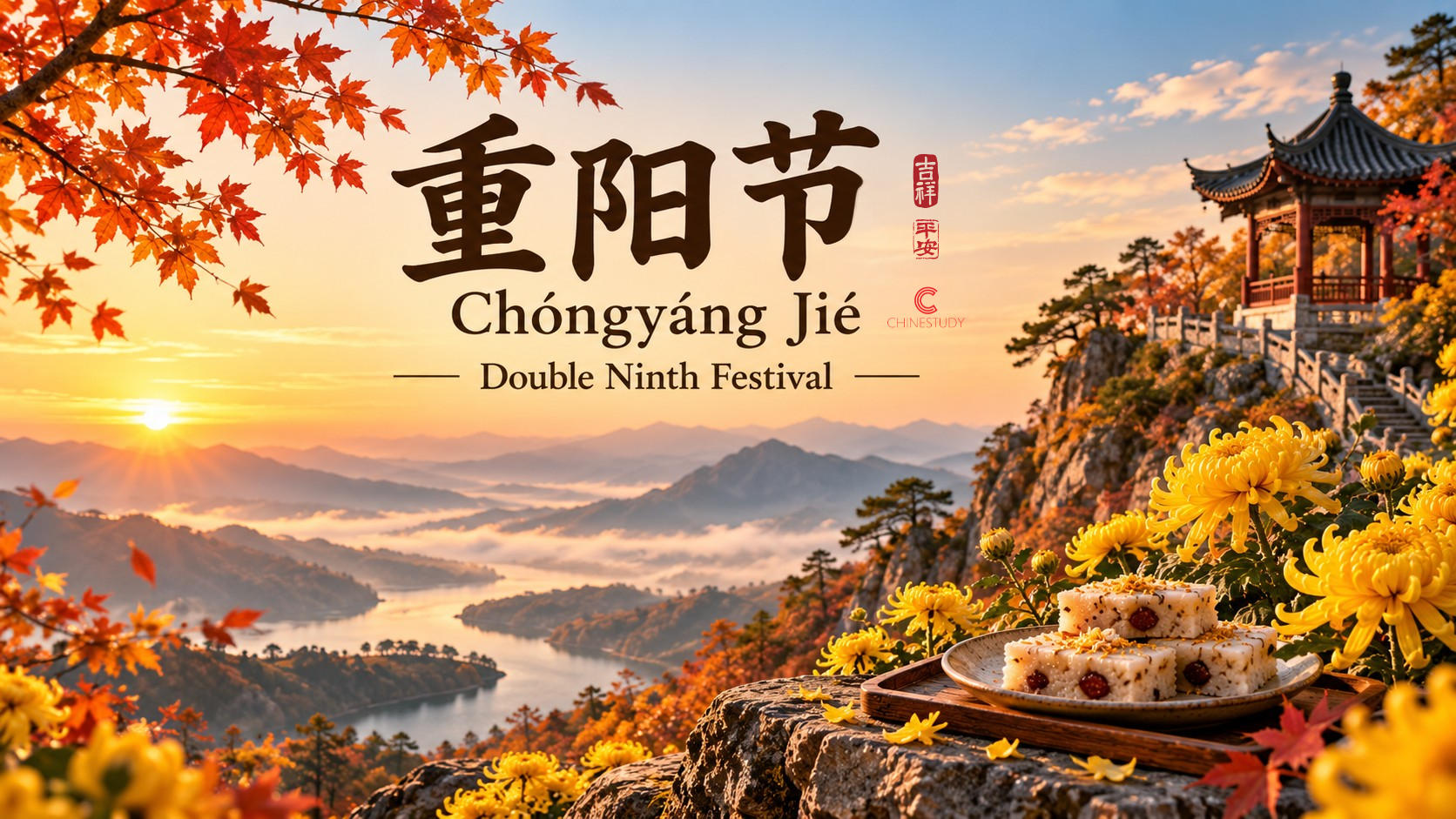
🏮 What Is 重阳节 (Chóngyáng Jié)?
重阳节 (Chóngyáng Jié), or the Double Ninth Festival, is a traditional Chinese festival celebrated on the ninth day of the ninth month of the lunar calendar.
Because it follows the lunar calendar, its date changes each year on the Gregorian calendar, usually falling in October or early November.
The festival has a long history and is closely associated with late autumn. Traditional customs include 登高 (dēnggāo), climbing to high places, enjoying chrysanthemums, and eating seasonal foods.
🧐 What Does the Name Mean?
The name 重阳节 (Chóngyáng Jié) can be understood word by word:
- 重 (chóng) – repeated / doubled
- 阳 (yáng) – yang, the “yang” side of 阴阳 (yīnyáng)
- 节 (jié) – festival
So 重阳节 literally means the “Double Yang Festival.”
Why “double yang”? The festival falls on 九月初九 (jiǔyuè chūjiǔ), the ninth day of the ninth month of the lunar calendar.
In traditional Chinese thought, odd numbers were associated with 阳 (yáng), and 九 (jiǔ), nine, is an odd number. Since the date contains two nines, it was seen as a doubling of yang, or 重阳 (chóngyáng).
That is also why the festival is commonly called the Double Ninth Festival in English.
⛰️ What Do People Do During 重阳节?
One of the best-known traditions of 重阳节 (Chóngyáng Jié) is 登高 (dēnggāo), climbing to a high place. For centuries, people have gone up mountains, hills, towers, or other high places during the festival. Traditionally, this custom was associated with avoiding misfortune and seeking good fortune. Today, people may still hike or visit scenic high places to enjoy the autumn scenery.
Chrysanthemums are another important part of the festival. People have long enjoyed 赏菊 (shǎng jú), viewing chrysanthemums, during 重阳节. Chrysanthemums are associated with endurance and longevity in Chinese culture.
Another traditional symbol is 茱萸 (zhūyú), an aromatic plant that people historically wore or carried during the festival. In traditional belief, it was associated with protection from illness and misfortune.
🥢 What Do People Eat During 重阳节?
One of the best-known foods of 重阳节 (Chóngyáng Jié) is 重阳糕 (Chóngyáng gāo), a traditional festival cake.
The word 糕 (gāo), cake, sounds like 高 (gāo), high. Because climbing to high places, or 登高 (dēnggāo), is an important 重阳节 tradition, the similar sound links 重阳糕 with the custom of 登高, making the cake especially meaningful during the festival.
Another traditional drink associated with the festival is 菊花酒 (júhuā jiǔ), chrysanthemum wine. Chrysanthemums have long been connected with 重阳节, and drinking chrysanthemum wine became one of the festival’s traditional customs.
👵👴 Why Is 重阳节 Connected with Older People?
Alongside these traditional customs, 重阳节 has also developed an important modern meaning. Today, it is a day for showing respect and care for older people.
One reason is the symbolism of 九 (jiǔ), nine. In Chinese, 九 (jiǔ) sounds like 久 (jiǔ), long-lasting, so the repeated nines in 九九 came to be associated with longevity.
In modern China, this meaning has become especially important. In 1989, China began observing the Double Ninth Festival as a day for older people. Today, it is officially recognized as 老年节 (Lǎonián Jié), Senior Citizens’ Day.
Today, families and communities may visit older relatives and organize activities that express 敬老 (jìnglǎo), meaning respect and care for older people.
🗣 Key Vocabulary & Expressions
Here are some useful Chinese words connected with 重阳节 (Chóngyáng Jié):
- 重阳节 (Chóngyáng Jié) – Double Ninth Festival
- 九月初九 (jiǔyuè chūjiǔ) – the ninth day of the ninth lunar month
- 登高 (dēnggāo) – climb to a high place
- 菊花 (júhuā) – chrysanthemum
- 赏菊 (shǎng jú) – admire chrysanthemums
- 茱萸 (zhūyú) – an aromatic plant traditionally associated with the festival
- 重阳糕 (Chóngyáng gāo) – Double Ninth cake
- 菊花酒 (júhuā jiǔ) – chrysanthemum wine
- 老人 (lǎorén) – older person / elderly person
- 敬老 (jìnglǎo) – respect and care for older people
🧩 Interactive Practice
Translate this sentence into English:
- 重阳节是农历九月初九。
- Chóngyáng Jié shì nónglì jiǔyuè chūjiǔ.
Answer:
The Double Ninth Festival falls on the ninth day of the ninth month of the lunar calendar.
🌟 Final Thoughts
重阳节 (Chóngyáng Jié) brings together late-autumn traditions such as climbing to high places, chrysanthemums, and seasonal foods.
Today, it also carries an important message of 敬老 (jìnglǎo), showing respect and care for older people.
🇨🇳 Curious about more Chinese traditions?
📚 Step into the blog series: Chinese Culture!
Thank you for subscribing!
Have a great day!